State of U.S. Retirement 2026: Inside the Retirement Vortex

Americans are being asked to assume more responsibility for retirement precisely when financial knowledge is weakening, employment is less predictable, and the nation’s financial foundations are under structural strain.
That collision is the Retirement Vortex.
It is not one bad market or one inadequate account balance. It is the convergence of public debt, uncertain retirement programs, economic pressure, fragmented information, and personal risks that no worker—or Wall Street advisor—can forecast perfectly.
The people most exposed are those who spent decades in the workplace trenches. They may have retirement accounts, but they do not have a retirement team.
They still deserve to retire with dignity and confidence.
To get started right now, I invite you to get on our Radar Notes email list, so you get the Big 3 Retirement Developments every Friday in your inbox at: https://bit.ly/rrrnotes
Pillar One: More Personal Responsibility, Less National Fiscal Room
Workers must now decide how much to save, how to invest, when to retire, when to claim Social Security, and how to make their money last for an unknown lifespan.
At the same time, the federal government is approaching retirement age with its own financial problems.
The Congressional Budget Office projects a $1.9 trillion federal deficit in 2026, with publicly held debt reaching $32.1 trillion, approximately 101% of the entire economy. CBO projects that debt will rise to 120% of the economy by 2036, while annual interest costs climb from approximately $1 trillion to more than $2.1 trillion.
Every dollar devoted to interest is a dollar unavailable for other national priorities. Rising debt can also place upward pressure on borrowing costs, restrain economic investment, and reduce the government’s capacity to respond to recessions, wars, disasters, or financial crises.
The Government Accountability Office calls the imbalance between federal spending and revenue structural and unsustainable.
Social Security’s retirement trust fund is projected to reach depletion in late 2032. Without congressional action, incoming revenue would cover only 78% of scheduled retirement and survivor benefits.
Meanwhile, the number of workers supporting each beneficiary is projected to fall from approximately 2.6 in 2025 to 1.9 by 2075.
This is not a prediction of national collapse. It is arithmetic and evidence that future tax increases, benefit changes, or both must remain part of any sober retirement discussion.
Pillar Two: More Information, Less Understanding
Americans have never had more financial content available.
Yet the 2025 TIAA Institute–GFLEC Personal Finance Index found that adults correctly answered only 49% of basic financial-literacy questions.
Only 36% of questions involving financial risk were answered correctly.
At the same time, individuals must understand Social Security, Medicare, taxes, healthcare, investing, inflation, housing, long-term care, and retirement withdrawals.
The problem is not a shortage of information. It is a shortage of clear context, trusted interpretation, and help connecting the decisions.
Retirement Readiness Radar was created to fill that gap.
RRR monitors the research, economic signals, policy developments, and retirement trends that most people do not have the time or specialized background to follow.
We filter the noise, translate complexity into plain language, and connect developments that are too often discussed in isolation—giving people without a private retirement team an intelligence resource working on their behalf.
Start with The Big 3, delivered every Friday through Radar Notes: three consequential retirement developments, why each one matters, and what it could mean for your retirement readiness.
Because you should not have to monitor the entire Retirement Vortex alone.
Pillar Three: More Uncertainty, Fewer Reliable Assumptions
No one can reliably forecast economic growth, inflation, interest rates, investment returns, healthcare costs, longevity, political decisions, or the future of an individual job.
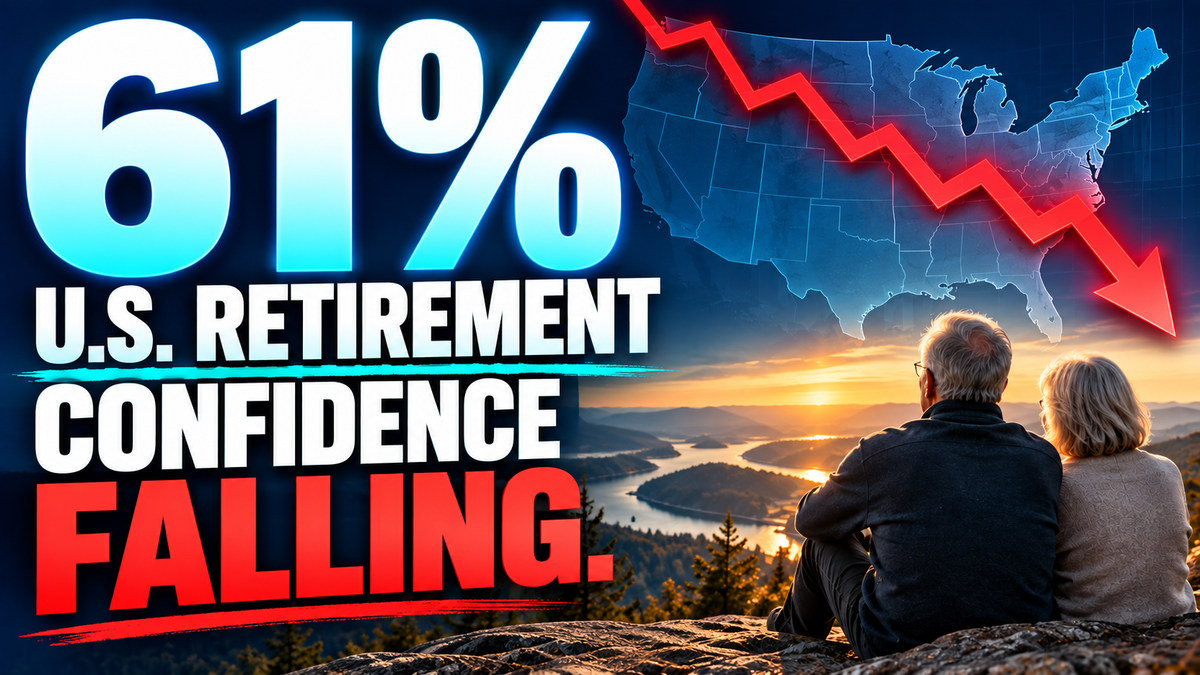
EBRI found that worker retirement confidence fell to 61% in 2026, its lowest level since 2017. It also found that 46% of retirees left work earlier than planned, often because of health problems, disability, or changes at their employer.
Although 74% of workers expect to work during retirement, only 31% of retirees actually do.
Even the default assumption of retiring in the United States deserves scrutiny.
Retiring abroad is not an escape hatch or a universal answer. It introduces questions involving residency, taxes, healthcare, currency, language, distance, and family.
But spending the golden years outside the United States can also transform the costs of housing, healthcare, and daily living.
Geography may be one of the few major retirement variables an individual can deliberately change.
Retirement Readiness Radar Steps Into the Breach
The state of U.S. retirement in 2026 is flashing a yellow warning light for Millennials and Gen Z: the traditional retirement bargain is weakening, but time remains a powerful ally.
For Gen X, the light is flashing red. This generation is next up to bat—approaching retirement with less time to recover from mistakes, market shocks, employment disruptions, or changes to Social Security and Medicare.
Americans are being asked to take on more responsibility for retirement at the same time financial knowledge is weak, confidence is falling, employment is less predictable, and the national retirement environment is becoming less supportive.
Call that perspective cynical if you wish. The data are all around us.
Optimism without examination is not a retirement strategy.
Retirement Readiness Radar steps into the breach to do its part as the sober, clear-eyed retirement readiness resource for people without high-powered Wall Street advisors or a private retirement team.
Narrowing the Retirement Gap
RRR follows the research, challenges assumptions, and translates complexity into plain language. We track the domestic economy, international economic developments, foreign affairs, retirement investments, Social Security, Medicare, retiring abroad, and the quality-of-life issues that determine what retirement will actually feel like.
We connect developments that are too often discussed separately because retirement decisions do not occur separately. A foreign conflict can affect energy prices and retirement accounts. A health problem can alter employment, Social Security, and housing decisions. Inflation can change both the cost of staying in the United States and the appeal of living elsewhere.
We cannot predict every market turn, political decision, international crisis, or health event. But RRR can help you see what is changing, understand what it could mean for your retirement, and identify the choices that remain within your control.
You may not have a private retirement team watching the horizon for you.
RRR is here to make sure you do not face it uninformed.
The Retirement Vortex describes the interlocking forces pulling Americans off course.
The Retirement Readiness Gap reveals the distance between expectations and reality.
Retirement Readiness Radar helps you read the signals, question the assumptions, and chart a more deliberate path forward, guided by research and reason.
Together, we can retire by our own rules.